Ghòstati! The workshop — Bring your face and curiosity
NINA’s Universal Union organises Ghòstati! workshops: collective experiments in visual self-defence against biometric surveillance.
Test how little face paint changes a local face-recognition result.
How a session runs
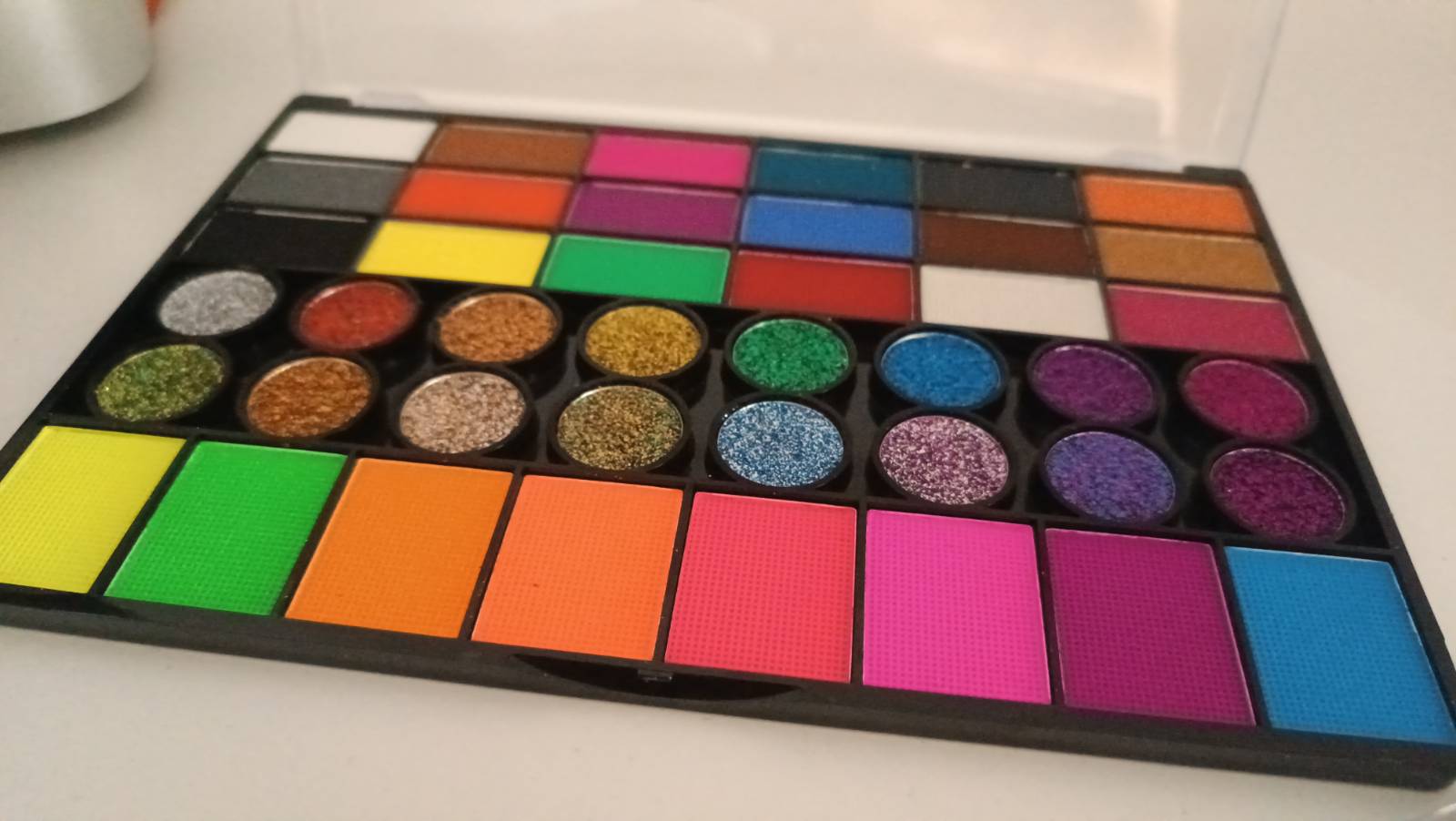
1. Bring water-based face paint and extra brushes
Start with the darkest and lightest colours.
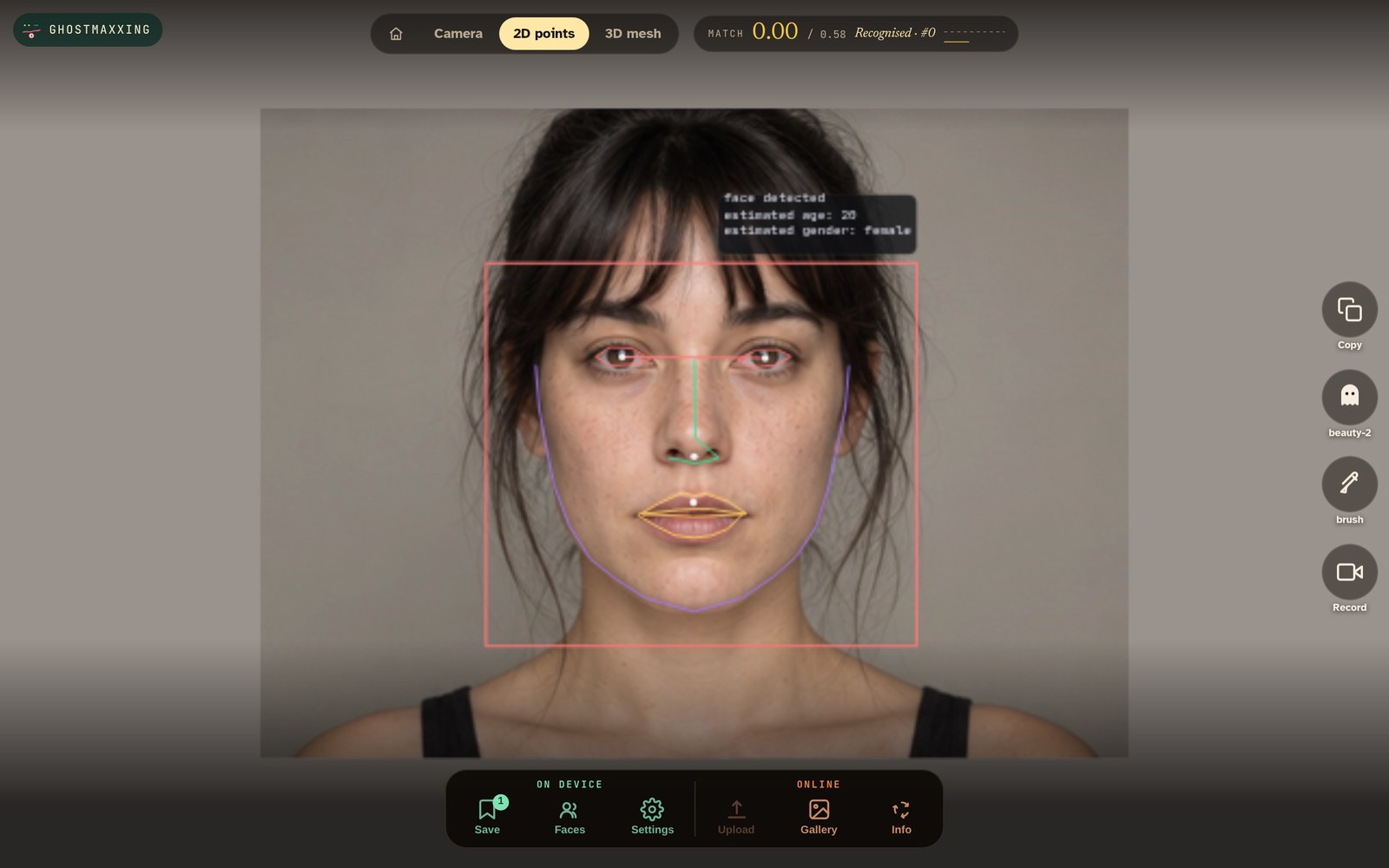
2. Save a clean baseline
Open the lab and save your face while it is still clean. That gives you an ID to test against.
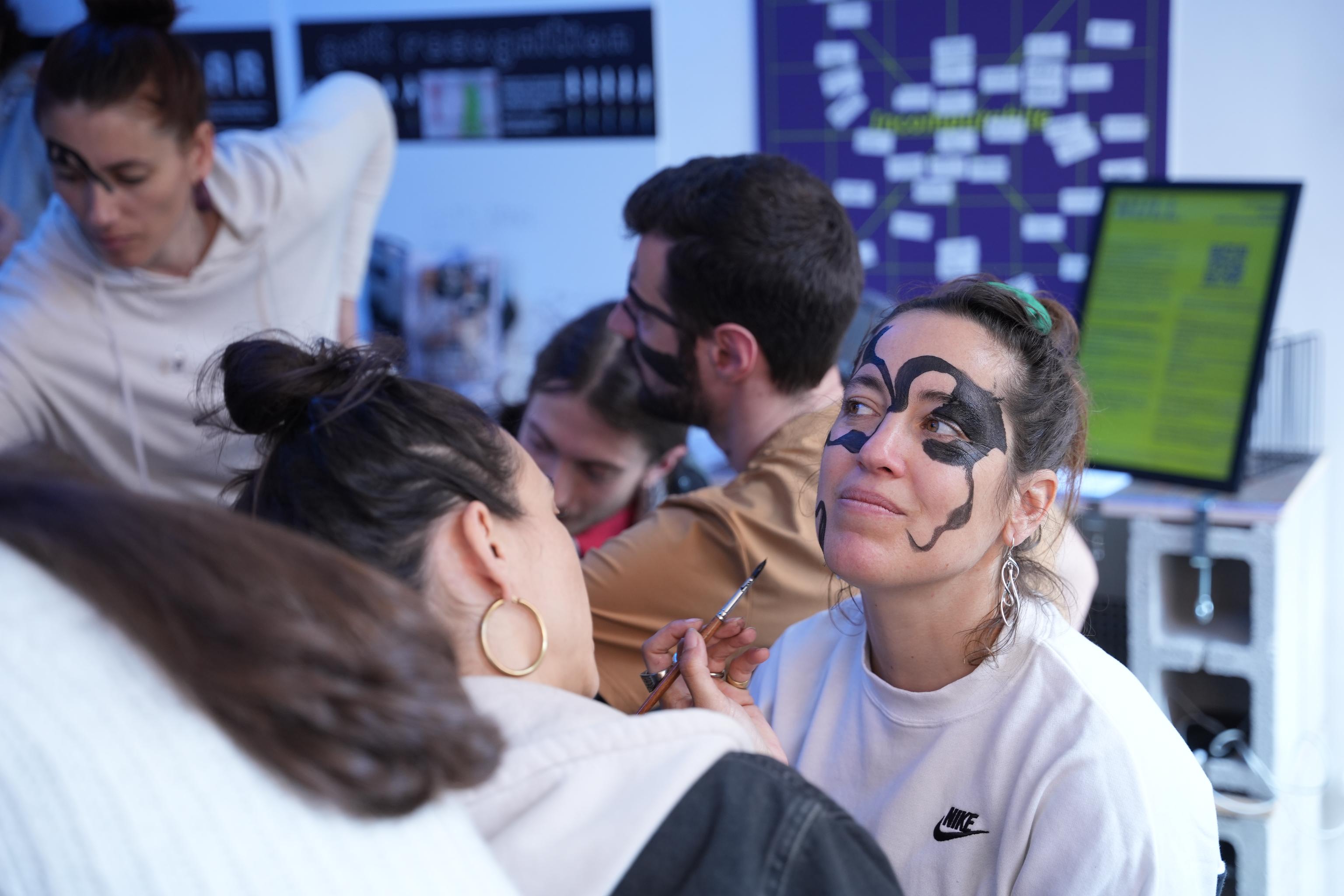
3. Paint. Break the lines of the face
In workshops people usually pair up and paint each other.
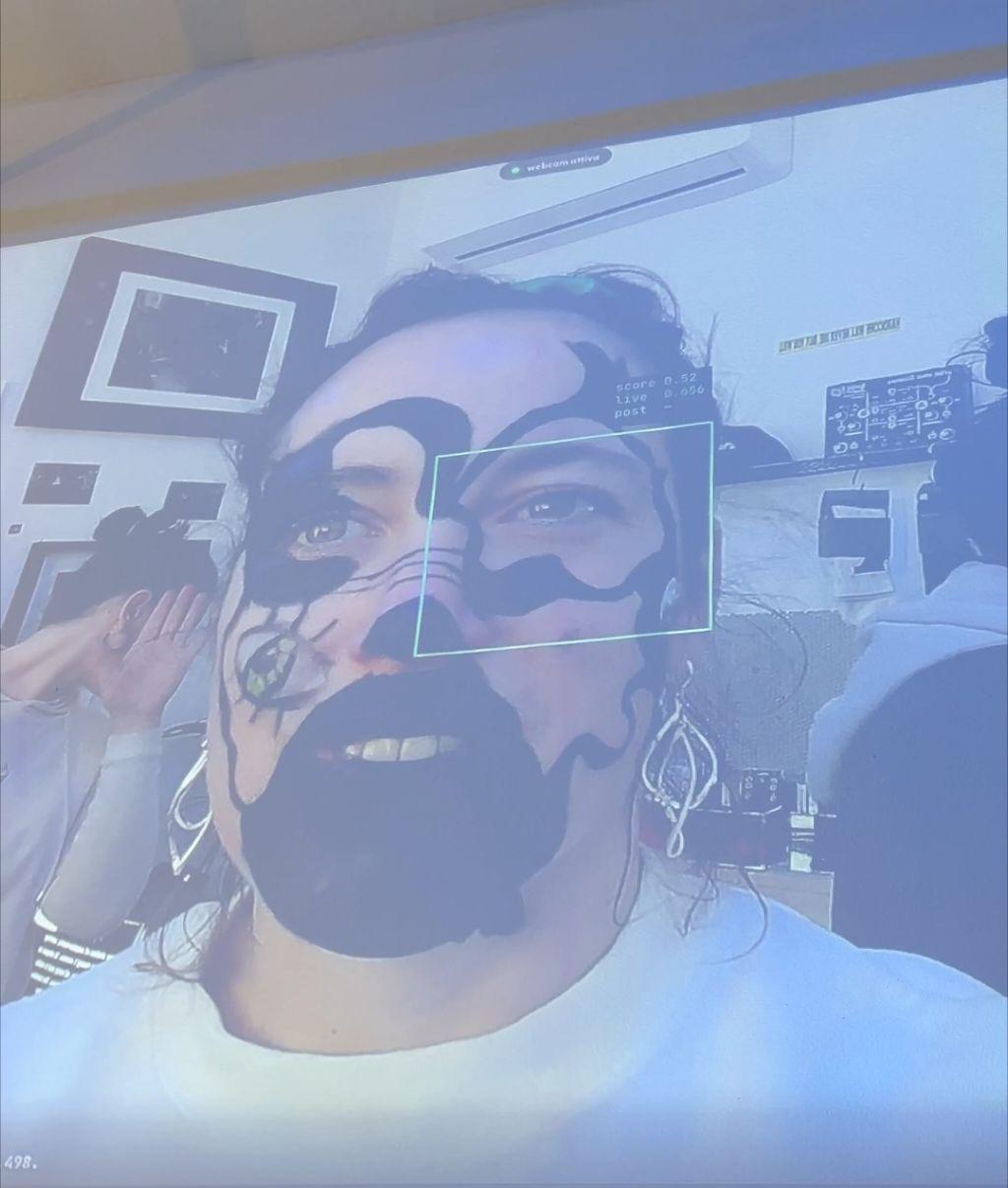
4. Go back to the webcam
Success is either no face detected at all, or your ID marked “eluded”.
5. A second check, no lab needed
Try any phone app with a face filter. If it asks you to find a face, you did it.
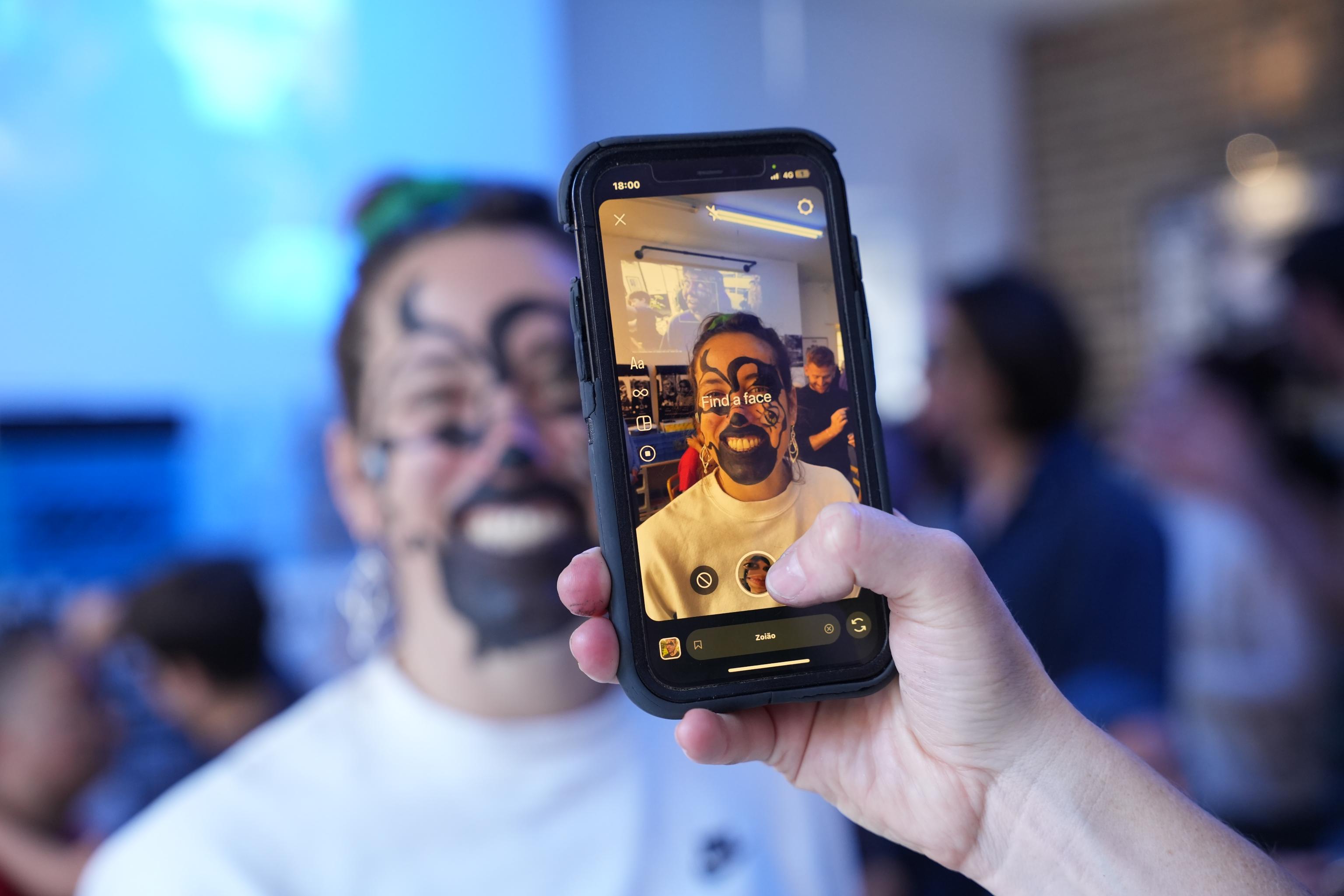
6. Reduce the paint and retest
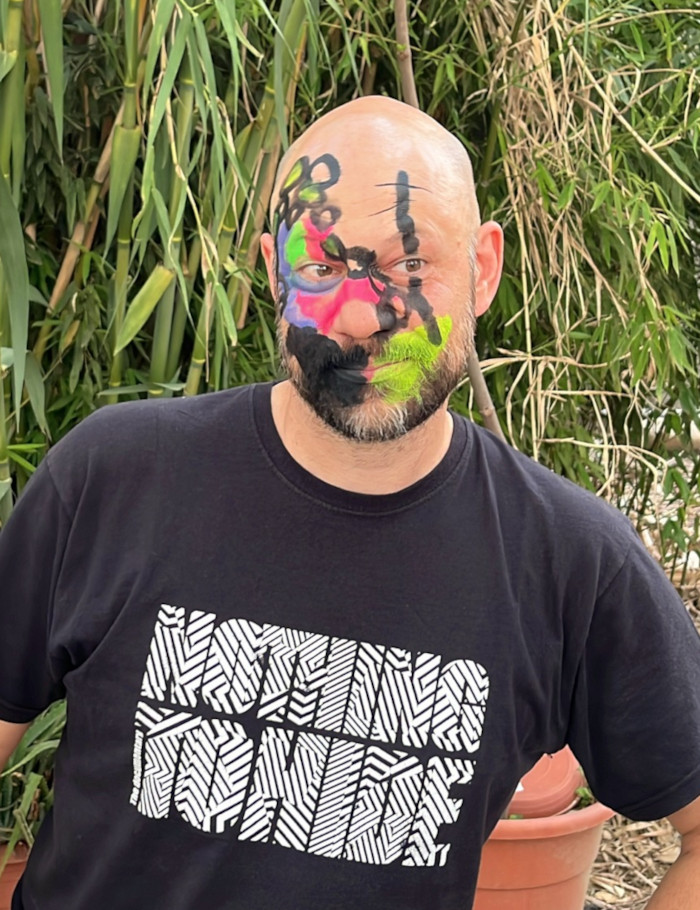
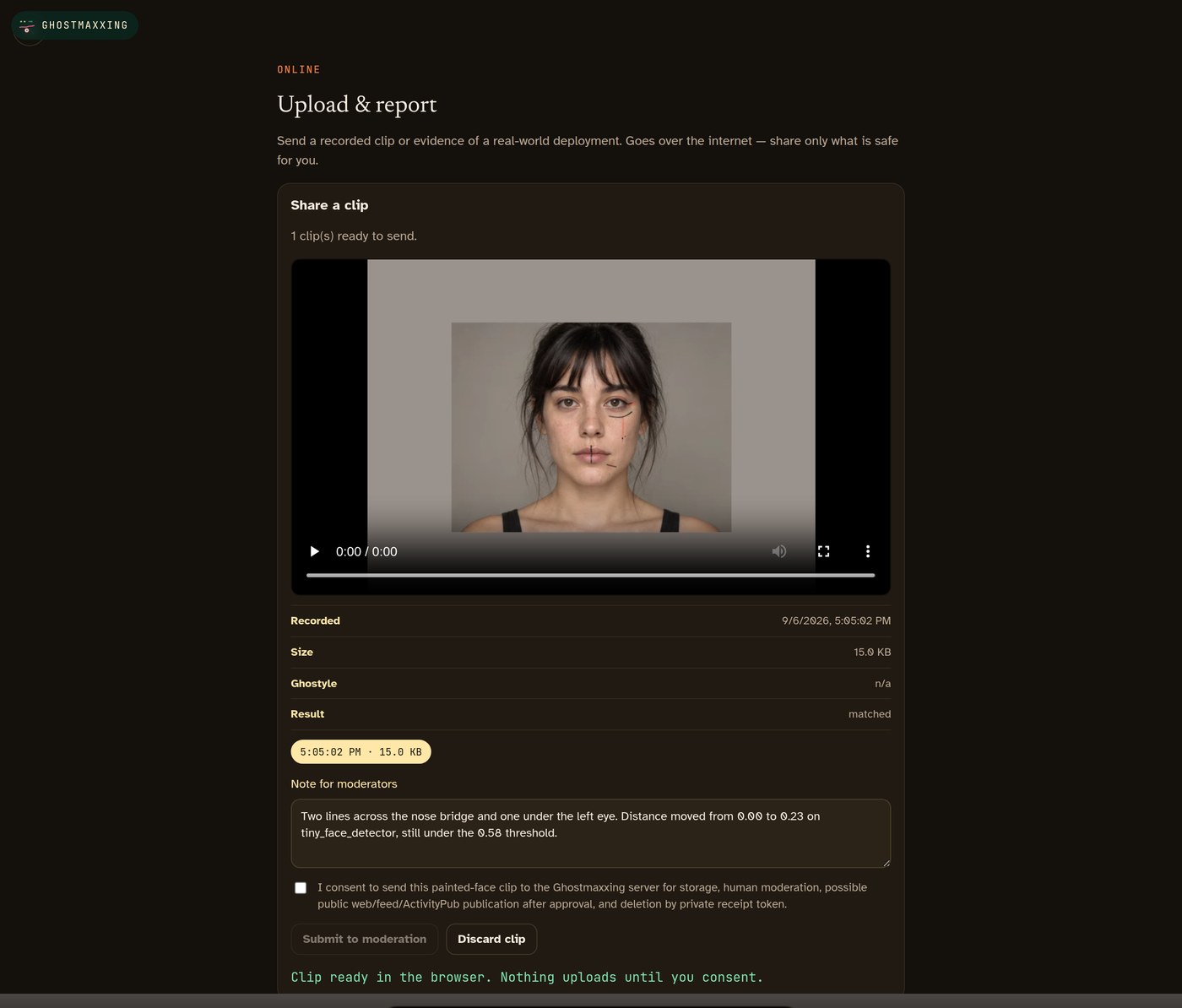
7. Share what worked
Contributions are ranked by how subtle they are, so a look that takes two lines is worth more here than one that takes a mask.
Run one where you are
Facilitators can join the Signal group below. Host matching is not yet available.
Facilitators Signal group, or scan: